Omeprazole vs Pantoprazole: Which PPI Is Right for Acid Reflux & GERD Treatment?
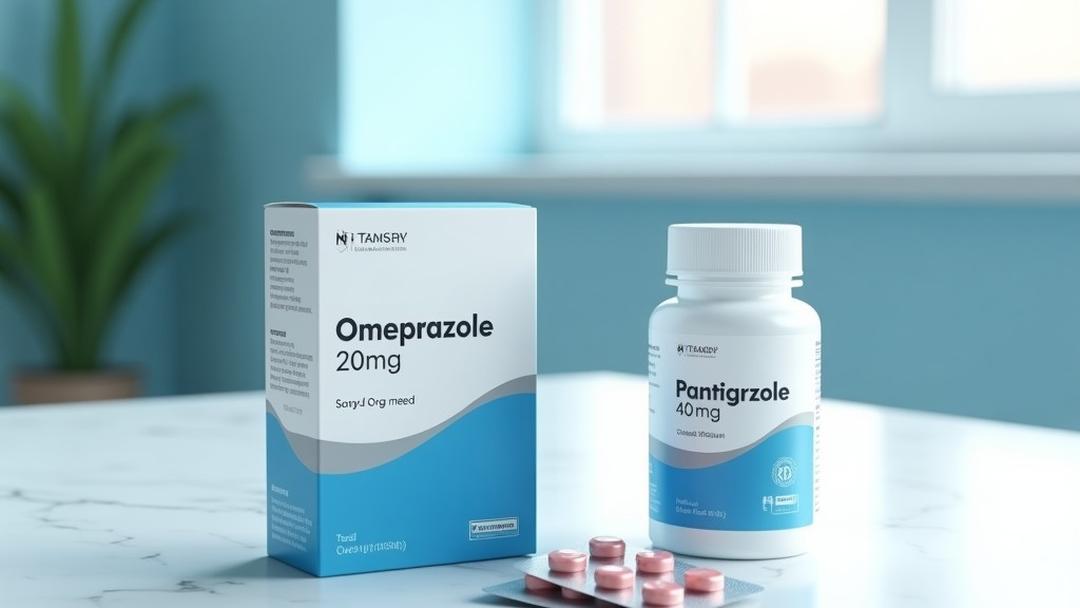
Proton pump inhibitors (PPIs) are the gold standard treatment for acid reflux, gastroesophageal reflux disease (GERD), and other acid-related gastrointestinal conditions. Omeprazole (brand name: Prilosec) and Pantoprazole (brand name: Protonix) are two of the most widely prescribed PPIs worldwide. This comparison examines Omeprazole vs Pantoprazole across uses, efficacy, dosage, side effects, and cost to help you understand which may be right for you.
What Is Omeprazole?
Omeprazole was the first proton pump inhibitor introduced to the market and remains one of the most commonly prescribed medications globally. It works by irreversibly inhibiting the H+/K+ ATPase enzyme system (the proton pump) in the gastric parietal cells, effectively reducing stomach acid production.
- Drug Class: Proton Pump Inhibitor (PPI)
- Common Strengths: 10mg, 20mg, 40mg
- Onset of Action: 1-4 days for full effect
- Duration: Up to 24 hours per dose
- Available Forms: Capsules, tablets, oral suspension, IV
What Is Pantoprazole?
Pantoprazole is a highly effective PPI commonly used in hospital and outpatient settings. It shares the same mechanism of action as Omeprazole but has some pharmacokinetic differences that may make it preferable in certain clinical scenarios.
- Drug Class: Proton Pump Inhibitor (PPI)
- Common Strengths: 20mg, 40mg
- Onset of Action: 1-4 days for full effect
- Duration: Up to 24 hours per dose
- Available Forms: Tablets, oral suspension, IV
Key Differences: Omeprazole vs Pantoprazole
| Feature | Omeprazole | Pantoprazole |
|---|---|---|
| Bioavailability | 30-40% (first pass metabolism) | 77% (higher systemic availability) |
| Food Effect | Absorption decreased by food (take before meal) | Absorption not significantly affected by food |
| Metabolism | CYP2C19 and CYP3A4 (more drug interactions) | Primarily CYP2C19 — less CYP3A4 involvement |
| OTC Availability | Yes (20mg, as Prilosec OTC) | Prescription only in most countries |
| Pediatric Use | Approved for children (1 year+) | Approved for children (5 years+) |
| IV Formulation | Available | Available (widely used in hospitals) |
Uses: When Is Each PPI Prescribed?
Omeprazole is Used For:
- GERD (gastroesophageal reflux disease)
- Erosive esophagitis
- Peptic ulcer disease (duodenal and gastric)
- Zollinger-Ellison syndrome
- Helicobacter pylori eradication (combination therapy)
- Gastroprotection from NSAID-induced ulcers
- Heartburn relief (OTC use)
Pantoprazole is Used For:
- GERD and erosive esophagitis
- Peptic ulcer disease
- Zollinger-Ellison syndrome
- Stress ulcer prophylaxis (hospital setting)
- Helicobacter pylori eradication
- Gastroprotection in ICU settings
- Hypersecretory conditions
Dosage Comparison
Omeprazole Dosage
- GERD/Heartburn (OTC): 20mg once daily for 14 days
- Erosive Esophagitis: 20mg once daily for 4-8 weeks
- Duodenal Ulcer: 20mg once daily for 4 weeks
- H. pylori Eradication: 20mg twice daily (as part of triple therapy)
- Zollinger-Ellison: 60mg once daily, titrated up to 120mg TID
Pantoprazole Dosage
- GERD: 40mg once daily for 4-8 weeks
- Erosive Esophagitis: 40mg once daily for 4-8 weeks
- Duodenal Ulcer: 40mg once daily for 4 weeks
- H. pylori Eradication: 40mg twice daily
- Hypersecretory Conditions: 40mg twice daily, up to 240mg/day
Side Effects Comparison
Common Side Effects (Both Medications)
Short-term use: Headache (5-7%), abdominal pain, diarrhea (4%), nausea (4%), flatulence (3%), constipation (2%)
Long-term use risks: Vitamin B12 deficiency, magnesium deficiency, increased risk of bone fractures (hip, wrist, spine), increased risk of Clostridium difficile infection, acute interstitial nephritis (rare), gastric fundic gland polyps
Drug Interaction Differences
Omeprazole has more interactions due to CYP2C19 and CYP3A4 metabolism. It can significantly affect clopidogrel (Plavix) efficacy, methotrexate clearance, citalopram levels, and warfarin metabolism.
Pantoprazole has fewer CYP interactions, making it a preferred choice in patients on multiple medications, particularly those taking clopidogrel.
Cost Comparison: Generic Options
Both medications are available as highly affordable generics from Indian and international manufacturers. Typical pricing for generic versions from online pharmacies:
- Generic Omeprazole 20mg (30 capsules): $3-$4-$10-$13 per strip
- Generic Pantoprazole 40mg (30 tablets): $4-$5-$12-$15 per strip
- Omeprazole OTC (14 capsules, branded): $9-$11-$16-$19
Note: Prices are approximate ranges. Actual costs vary by manufacturer, quantity, and pharmacy. Generic Indian PPIs are often significantly cheaper than branded equivalents.
Which PPI Should You Choose?
Choose Omeprazole if: You prefer an over-the-counter option for occasional heartburn, need pediatric dosing (1 year+), or your doctor specifically recommends it for H. pylori eradication therapy.
Choose Pantoprazole if: You are on multiple medications and want to minimize drug interactions (especially if taking clopidogrel), need IV administration in a hospital setting, or require a PPI with higher bioavailability.
Frequently Asked Questions
Is Pantoprazole stronger than Omeprazole?
Both are equally effective for most conditions at standard therapeutic doses. Pantoprazole has higher systemic bioavailability (77% vs 30-40%), but this does not necessarily translate to greater clinical efficacy. The choice between them is often based on individual response, drug interaction profile, and cost.
Can I switch from Omeprazole to Pantoprazole?
Yes, switching between PPIs is common. The therapeutic equivalence is approximately: Omeprazole 20mg ≈ Pantoprazole 40mg. Always consult your doctor before switching.
Which PPI causes less long-term side effects?
Both carry the same class-wide risks for long-term use, including vitamin and mineral deficiencies, bone fracture risk, and kidney effects. The key differentiator is drug interactions — Pantoprazole may be safer for patients on clopidogrel.
Are generic versions as effective?
Yes, generic Omeprazole and Pantoprazole must meet the same bioequivalence standards as the brand-name versions. Generic Indian PPIs are widely used and well-regarded for their quality and affordability.
Disclaimer: This article is for educational purposes only and does not constitute medical advice. Always consult a healthcare provider before starting, stopping, or switching any medication. PPIs should generally be used at the lowest effective dose for the shortest duration necessary.