
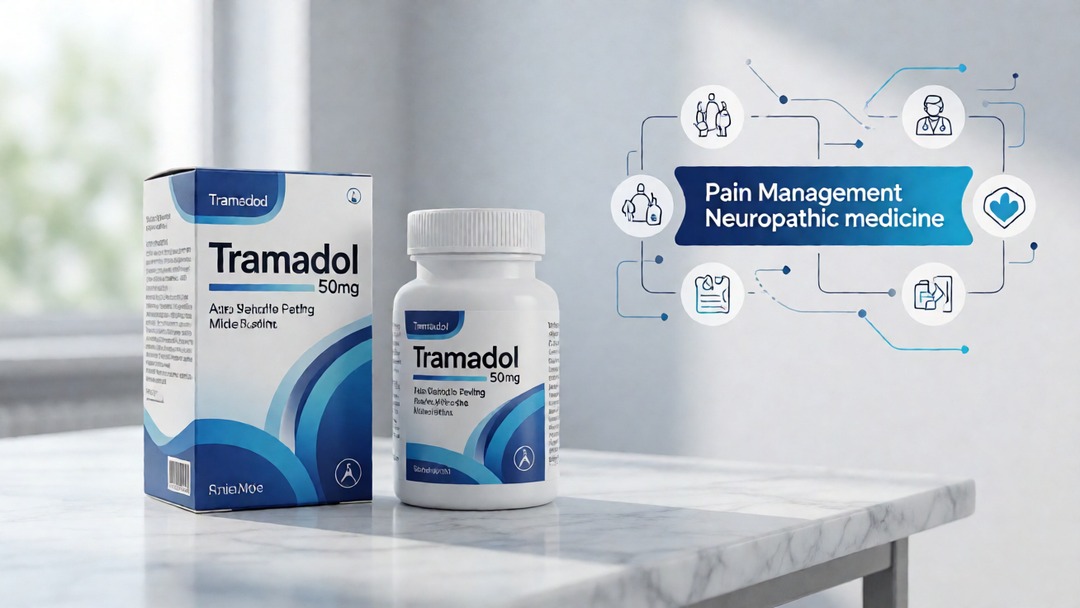
Tramadol (Ultram) Guide: Uses, Dosage, Side Effects & Affordable Generic Options
Tramadol occupies a unique niche in pain management: it is a centrally acting analgesic with two mechanisms — a weak opioid receptor agonist and a serotonin-norepinephrine reuptake inhibitor — that together provide relief for moderate to moderately severe pain while carrying a different risk profile from traditional opioids. If you have been quoted a high price for branded Ultram, you are not alone. This guide explains how tramadol works, who it helps, what to watch for, and why its generic version costs a fraction of the brand.
What Is Tramadol?
Tramadol is a synthetic centrally acting analgesic approved for the management of moderate to moderately severe pain in adults. It is available as immediate-release tablets (most commonly 50 mg), extended-release tablets and capsules (100 mg, 200 mg, and 300 mg), and an oral drops formulation. Under the brand name Ultram and multiple generic labels, it is prescribed for both acute pain (post-surgical, injury-related) and chronic pain conditions including neuropathic pain.
Unlike full mu-opioid agonists such as oxycodone or morphine, tramadol produces analgesia through a dual mechanism. This dual action is part of why clinicians consider it for pain states where pure opioids may be excessive or where a combined approach targeting both pain signaling and mood-related pain amplification is desirable.
How Tramadol Works (Dual Mechanism)
Tramadol’s pain-relieving effect comes from two complementary pathways:
- Weak mu-opioid receptor agonism — the active metabolite O-desmethyltramadol (also called M1) binds to mu-opioid receptors in the central nervous system, dampening pain transmission. This effect is weaker than that of morphine or oxycodone on a per-milligram basis.
- Serotonin and norepinephrine reuptake inhibition (SNRI-like activity) — tramadol and its metabolite block the reuptake of serotonin and norepinephrine, neurotransmitters involved in the body’s descending pain-inhibitory pathways. This mechanism contributes additional analgesia, particularly for neuropathic and chronic pain.
The dual mechanism means tramadol can be effective for pain types that respond poorly to pure anti-inflammatory drugs — notably nerve pain, fibromyalgia-type pain, and chronic musculoskeletal pain. However, this same mechanism introduces drug interaction and serotonin syndrome considerations that are less prominent with pure NSAIDs.
Approved and Common Uses
- Moderate to moderately severe acute pain — post-surgical pain, injury-related pain, dental pain after procedures.
- Chronic pain — osteoarthritis, chronic low back pain, and other persistent pain states where NSAIDs alone are insufficient or contraindicated.
- Neuropathic pain — used off-label and in some guidelines for diabetic peripheral neuropathy and post-herpetic neuralgia, often as an alternative when gabapentinoids are not tolerated.
- Fibromyalgia — used off-label when other approaches have been inadequate.
Dosage Guidelines
| Indication | Typical Adult Starting Dose | Titration / Maximum |
|---|---|---|
| Acute moderate pain (immediate-release) | 50–100 mg every 4–6 hours as needed | Max 400 mg/day; lower max (300 mg/day) for patients over 75 |
| Chronic pain (extended-release) | 100 mg once daily | Titrate by 100 mg every 5 days; max 300 mg/day |
| Neuropathic pain (off-label) | 50 mg once or twice daily | Titrate to effect; often 100–300 mg/day in divided doses |
| Elderly (over 75) | Lower starting dose, longer intervals | Max 300 mg/day; renal function guides dosing |
| Renal impairment (CrCl <30) | Dose reduction and/or extended interval | Extend dosing interval; max 200 mg/day |
| Hepatic impairment | Reduced dose | Reduced dose and/or longer intervals per clinician |
Tramadol immediate-release is taken as needed for pain, with doses spaced at least 4 hours apart. Extended-release tramadol is taken once daily, swallowed whole — do not crush, chew, or split extended-release formulations.
Tramadol is a controlled substance (Schedule IV in the United States) due to its opioid activity and potential for dependence. Use the lowest effective dose for the shortest necessary duration, and never share your medication.
Tramadol vs Other Pain Medications
| Feature | Tramadol | Gabapentin | Pregabalin | Morphine/Oxycodone |
|---|---|---|---|---|
| Primary mechanism | Weak opioid agonist + SNRI | Calcium channel alpha-2-delta ligand | Calcium channel alpha-2-delta ligand | Full mu-opioid agonist |
| Best suited for | Mixed nociceptive + neuropathic pain | Neuropathic pain, seizures | Neuropathic pain, seizures, RLS | Severe nociceptive pain, cancer pain |
| Controlled substance | Schedule IV (US) | Not scheduled federally (some states) | Schedule V (US) | Schedule II (US) |
| Serotonin syndrome risk | Yes — with other serotonergic drugs | No | No | No |
| Typical generic cost (per month, US retail) | $9–$35 | $9–$30 | $14–$55 | $15–$60+ |
| Key caution | Seizure risk, serotonergic interactions | Rebound on abrupt stop | Sedation, swelling, controlled substance | Respiratory depression, high dependence risk |
Tramadol’s place in therapy is often for pain that sits between what NSAIDs can handle and what strong opioids are justified for. For a closer comparison with gabapentinoids, see our Tramadol vs Pregabalin guide and the broader Pharmaceuticals category.
Generic Pricing: India vs US Brand
Tramadol is a cost-effective treatment option in its generic form — the active compound has been widely manufactured for years, and generic competition keeps prices low. The gap between Indian-manufactured generics and US-branded Ultram can be substantial. The figures below are indicative ±10% retail ranges and will vary by pharmacy, strength, and quantity:
| Product | Strength / Pack | Indicative Price Range |
|---|---|---|
| Indian generic tramadol (immediate-release) | 50 mg × 100 tablets | $5–$15 |
| Indian generic tramadol (immediate-release) | 50 mg × 30 tablets | $3–$9 |
| Indian generic tramadol ER | 100 mg × 30 tablets | $8–$22 |
| US branded Ultram (immediate-release) | 50 mg × 60 tablets | $70–$200 |
| US generic (retail pharmacy) | 50 mg × 60 tablets | $10–$35 |
That spread means the same active compound can cost a small fraction of the branded price when sourced as a generic. Prices fluctuate with supply-chain conditions, currency rates, and local demand; always confirm the current figure with your dispensing pharmacy.
Side Effects and Safety
Most people tolerate tramadol well at therapeutic doses, but its dual mechanism means the side-effect profile blends opioid and SNRI-class effects:
- Very common — nausea, dizziness, drowsiness, dry mouth, and sweating. Taking with food may reduce nausea.
- Common — headache, constipation, vomiting, fatigue, and pruritus (itching).
- Important risks — seizures (dose-dependent; risk rises with doses above 400 mg/day and in patients with a seizure disorder or with drugs that lower the seizure threshold), serotonin syndrome (especially when combined with SSRIs, SNRIs, MAOIs, triptans, or certain migraine medications), and respiratory depression (rare at therapeutic doses but possible with high doses or when combined with other CNS depressants).
- Dependence and withdrawal — physical dependence can develop with prolonged use; abrupt discontinuation can cause withdrawal symptoms including anxiety, sweating, insomnia, nausea, and tremors. Taper under medical guidance.
Who Should Use Caution or Avoid Tramadol
Tramadol is contraindicated in people with a history of seizures or epilepsy, those taking MAO inhibitors (within 14 days), and patients with known hypersensitivity to tramadol. Use with extreme caution in:
- Patients taking SSRIs, SNRIs, TCAs, MAOIs, triptans, or other serotonergic drugs — serotonin syndrome risk.
- Patients with kidney or liver impairment — dose adjustment needed.
- Older adults — higher risk of falls, confusion, and seizures.
- Pregnant or breastfeeding patients — discuss risks and benefits; tramadol passes into breast milk.
- Anyone with a history of substance misuse — Tramadol carries dependence potential.
Decision Guide: Is Tramadol Right for You?
- Do you have moderate pain that NSAIDs have not adequately controlled? → Tramadol may be a reasonable step before stronger opioids.
- Is your pain partly neuropathic (burning, shooting, electric)? → Tramadol’s dual mechanism can help where pure opioids or pure gabapentinoids alone may not.
- Are you taking an SSRI, SNRI, or other serotonergic medication? → Discuss serotonin syndrome risk with your prescriber before starting tramadol.
- Do you have a history of seizures, head injury, or substance misuse? → Tramadol may not be the safest choice; your clinician will consider alternatives.
- Is cost a barrier to staying on therapy? → Generic tramadol offers an affordable medication solution at a fraction of branded Ultram pricing.
Frequently Asked Questions
How long does it take for tramadol to start working?
Immediate-release tramadol typically begins to relieve pain within 1 to 2 hours, with peak effect around 2 to 4 hours after a dose. Extended-release tramadol provides steadier coverage over 24 hours. Do not take additional doses sooner than directed to make up for a slower perceived onset.
Is tramadol considered an opioid?
Yes — tramadol is classified as an opioid analgesic, though it is a weak mu-opioid agonist compared with drugs like oxycodone or morphine. It also has SNRI activity. In the US it is a Schedule IV controlled substance, reflecting its opioid properties and dependence potential, but a lower schedule than strong opioids (Schedule II).
Can I take tramadol with ibuprofen or acetaminophen?
Yes — tramadol is often combined with NSAIDs (such as ibuprofen) or acetaminophen for additive pain relief, and this combination is common in clinical practice. However, always follow your prescriber’s directions and do not exceed recommended doses of any component. Taking tramadol with food or a non-opioid pain reliever may improve tolerability.
What is serotonin syndrome and why does it matter with tramadol?
Serotonin syndrome is a potentially serious condition caused by excessive serotonin activity, usually when multiple serotonergic drugs are combined. Symptoms include agitation, confusion, rapid heart rate, high blood pressure, dilated pupils, muscle rigidity, twitching, and in severe cases fever and seizures. Because tramadol has serotonergic activity, combining it with SSRIs, SNRIs, MAOIs, triptans, or certain other drugs raises this risk. Seek urgent medical attention if these symptoms appear.
Can I stop tramadol suddenly?
No — if you have been taking tramadol regularly for more than a few weeks, stopping abruptly can cause withdrawal symptoms. Work with your clinician to taper gradually. If you have been taking it only occasionally at low doses, the risk of withdrawal is lower, but always check with your prescriber before stopping.
Why is generic tramadol so much cheaper than Ultram?
Tramadol lost patent exclusivity years ago, and multiple manufacturers produce generic versions worldwide. Generic competition drives the price down, and international manufacturers — including licensed Indian generic facilities — routinely offer the same active compound at a fraction of US brand prices. The active ingredient, dosage form, and bioequivalence requirements are the same.
References
- FDA Tramadol Hydrochloride prescribing information (label).
- American Pain Society — Guidelines for the management of pain.
- WHO Analgesic Ladder — pain management principles.
- American Academy of Neurology — Practice guideline on pharmacologic treatment of neuropathic pain.
- UpToDate: Tramadol — drug information, pharmacology, and clinical use.
- Cochrane Review: Tramadol for Neuropathic Pain.
- FDA Drug Safety Communication: Tramadol and seizure/serotonin syndrome risk.
Medical disclaimer: This article is informational only and is not a substitute for professional medical advice, diagnosis, or treatment. Always consult a qualified healthcare provider before starting, stopping, or changing any medication — particularly with controlled substances like tramadol. Prices shown are indicative ±10% ranges and may vary by pharmacy, region, strength, and quantity; confirm current pricing with your dispenser. Tramadol is a Schedule IV controlled substance in the US; use only as prescribed and never share your medication.