
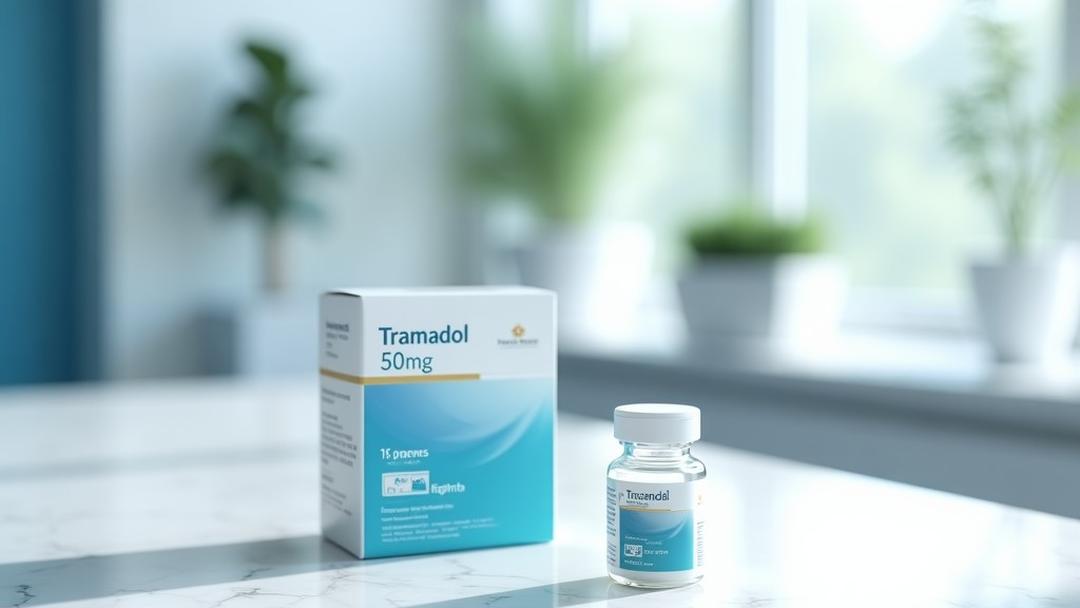
What Is Tramadol?
Tramadol is a centrally acting synthetic opioid analgesic used for managing moderate to moderately severe pain. Marketed under the brand name Ultram in the United States, tramadol occupies a unique position in the analgesic spectrum — it is weaker than traditional opioids like morphine or oxycodone but more potent than non-opioid analgesics. Its dual mechanism of action — weak mu-opioid receptor agonism combined with serotonin and norepinephrine reuptake inhibition — makes it effective for a wide range of pain conditions while theoretically carrying a lower risk of respiratory depression compared to classical opioids.
First synthesized in Germany in 1962 by Grünenthal GmbH and introduced clinically in the 1970s, tramadol gained FDA approval in the United States in 1995. It is now one of the most widely prescribed pain medications globally and is included on the World Health Organization’s Model List of Essential Medicines.
Mechanism of Action
Tramadol has a unique dual mechanism of action that distinguishes it from other opioids:
1. Opioid Receptor Agonism: Tramadol and its active metabolite M1 (O-desmethyltramadol) bind to mu-opioid receptors in the central nervous system. The M1 metabolite has approximately 200 times higher affinity for mu-opioid receptors than the parent compound, contributing significantly to tramadol’s analgesic effect. This binding activates G-protein coupled signaling pathways that inhibit adenylate cyclase, reduce cAMP levels, and modulate ion channels — leading to reduced neurotransmitter release and diminished pain signal transmission.
2. Monoamine Reuptake Inhibition: Tramadol inhibits the reuptake of serotonin and norepinephrine in the central nervous system, similar to antidepressant medications. This enhances descending inhibitory pain pathways from the brainstem to the spinal cord. The noradrenergic component is particularly important for neuropathic pain modulation.
The combination of opioid and monoaminergic mechanisms produces synergistic analgesia, allowing effective pain relief at lower opioid receptor occupancy than typical opioids, which theoretically translates to a more favorable safety profile.
Uses and Indications
Acute Pain
Tramadol is effective for managing acute pain following surgery, dental procedures, and injury. Studies show tramadol 50mg provides comparable analgesia to morphine 5–10 mg for moderate acute pain, with less respiratory depression. Typical treatment duration for acute pain is 3–7 days.
Chronic Pain
Tramadol is used for chronic moderate-intensity pain conditions, including osteoarthritis, chronic low back pain, and fibromyalgia. It is often preferred over stronger opioids for long-term management due to its lower abuse potential — though dependence and tolerance still develop with prolonged use.
Neuropathic Pain
Due to its serotonin-norepinephrine reuptake inhibition, tramadol is particularly useful for neuropathic pain conditions such as diabetic peripheral neuropathy, postherpetic neuralgia, and sciatica. The European Federation of Neurological Societies (EFNS) guidelines list tramadol as a first- or second-line treatment for neuropathic pain.
Labor Pain
Tramadol is used in some settings for labor analgesia, though it crosses the placenta and may cause neonatal respiratory depression and adaptation difficulties.
Dosage and Administration
| Condition | Starting Dose | Maximum Dose | Notes |
|---|---|---|---|
| Acute Pain (adults) | Tramadol 50mg every 4–6 hours | 400mg/day (200mg if >75 years) | Immediate-release tablets |
| Chronic Pain | Tramadol 25mg daily (titrate slowly) | 300mg/day (extended-release) | Extended-release once daily |
| Neuropathic Pain | Tramadol 50mg every 6–8 hours | 400mg/day | May need 4–6 weeks for full effect |
| Osteoarthritis Pain | Tramadol 50mg every 6 hours PRN | 300mg/day (ER formulation) | Consider lower starting dose |
Administration: Immediate-release tramadol 50mg tablets can be taken with or without food. Extended-release formulations must be swallowed whole — never crushed, chewed, or broken. Titration should be gradual: start at 25mg daily and increase by 25mg every 3–5 days to minimize side effects (nausea, dizziness) during initiation.
Side Effects
Common Side Effects (10–30% of patients)
- Nausea and vomiting
- Dizziness and vertigo
- Drowsiness and sedation
- Constipation (less severe than traditional opioids)
- Headache
- Sweating
- Dry mouth
Serious Side Effects (rare, <1%)
- Seizures: Tramadol lowers the seizure threshold. Risk increases at high doses (>400mg/day), with concurrent use of SSRIs/SNRIs, or in patients with epilepsy
- Serotonin Syndrome: Potentially life-threatening when combined with other serotonergic drugs (SSRIs, MAOIs, triptans)
- Respiratory Depression: Less risk than traditional opioids but still possible, especially in overdose
- Dependence and Withdrawal: Physical dependence develops with regular use. Withdrawal symptoms include anxiety, sweating, insomnia, abdominal cramps, and flu-like symptoms
- Hypoglycemia: Rare cases of low blood sugar reported
- Adrenal Insufficiency: Very rare cases reported with prolonged use
Drug Interactions
Tramadol has significant drug interaction potential due to its CYP450 metabolism and serotonergic activity:
- SSRIs/SNRIs: Increased risk of serotonin syndrome — avoid combination or use extreme caution
- MAOIs: Contraindicated — risk of severe serotonin syndrome
- Benzodiazepines: Additive CNS depression and respiratory depression risk (FDA Boxed Warning)
- Alcohol: Increased sedation, respiratory depression, and seizure risk
- CYP2D6 Inhibitors: Drugs like fluoxetine, paroxetine, bupropion reduce conversion to active M1 metabolite, potentially reducing efficacy
- CYP3A4 Inducers: Carbamazepine, rifampin reduce tramadol levels
- Anticoagulants (Warfarin): Potential increased INR — monitor closely
- Triptans: Increased risk of serotonin syndrome
Comparison with Other Pain Medications
| Drug | Mechanism | Potency (vs morphine) | Abuse Potential | Typical Dose |
|---|---|---|---|---|
| Tramadol | Mu-opioid agonist + SNRI | 1/10 | Low-moderate | Tramadol 50mg |
| Codeine | Mu-opioid agonist | 1/10 | Moderate | 30–60mg |
| Hydrocodone | Mu-opioid agonist | 3/5 | High | 5–10mg |
| Oxycodone | Mu-opioid agonist | 3/5 | High | 5–10mg |
| Morphine | Mu-opioid agonist | 1 | High | 10–30mg |
| Tapentadol | Mu-opioid agonist + NRI | 1/5–1/3 | Moderate | 50–100mg |
Affordable Generic Tramadol and Pricing
Generic tramadol is manufactured by numerous pharmaceutical companies worldwide at a fraction of the cost of brand-name Ultram. Indian generic manufacturers produce high-quality tramadol that meets USP, BP, and WHO standards.
Indian Generic Tramadol Pricing: Approximately $7–$12 for a 30-tablet supply of tramadol 50mg.
US Brand Ultram Pricing: Approximately $45–$110 for a 30-tablet supply of tramadol 50mg (brand).
US Generic Tramadol Pricing: Approximately $12–$22 for a 30-tablet supply.
By choosing high-quality Indian generic tramadol from certified manufacturers, patients can save 50–85% on medication costs. International pharmacy sourcing platforms like 984online’s Pain Relief Medications provide access to affordable generic tramadol for patients managing chronic pain conditions.
FAQ
1. Is tramadol a controlled substance?
Yes, tramadol is a Schedule IV controlled substance in the United States (DEA classification), indicating it has accepted medical use but carries a risk of dependence and abuse. In many other countries, it is similarly regulated.
2. Can tramadol be taken with ibuprofen or acetaminophen?
Yes, tramadol can be combined with non-opioid analgesics like ibuprofen (NSAID) or acetaminophen for additive pain relief. In fact, combination products containing tramadol and acetaminophen (37.5mg/325mg) are available as prescription medications.
3. How long does tramadol stay in your system?
Tramadol has a half-life of approximately 5–7 hours, while its active M1 metabolite has a half-life of 7–9 hours. Tramadol can be detected in urine for 1–4 days after the last dose, depending on dose, frequency of use, and individual metabolism.
4. Is tramadol safe for elderly patients?
Elderly patients may be more sensitive to tramadol’s effects and require dose adjustments. The maximum recommended dose for patients over 75 years is 200mg/day. Caution is advised due to increased risks of falls, sedation, constipation, and respiratory depression.
5. Can tramadol cause false-positive drug tests?
Yes, tramadol can potentially cause false-positive results on urine drug screens for PCP (phencyclidine) and, at high concentrations, for opiates. Confirmatory testing (GC-MS) can distinguish tramadol from these substances.
Clinical Evidence and Efficacy
The analgesic efficacy of tramadol has been established through numerous randomized controlled trials and systematic reviews. A Cochrane review of 22 trials involving over 4,500 patients with osteoarthritis found that tramadol 50mg provided superior pain relief compared with placebo (moderate-quality evidence), with a 30-50% reduction in pain scores. For neuropathic pain, a systematic review published in the Cochrane Database of Systematic Reviews concluded that tramadol is effective for diabetic peripheral neuropathy and postherpetic neuralgia, with a number-needed-to-treat of 4 for moderate benefit. In postoperative pain management, tramadol 50-100mg demonstrated comparable analgesia to meperidine 50-100mg with fewer adverse effects. A network meta-analysis comparing tramadol with other opioids found that tramadol had the lowest risk of constipation, nausea, and respiratory depression among commonly used opioid analgesics. However, the same analysis confirmed that tramadol carries a meaningful risk of dependence with prolonged use — reinforcing current CDC guidelines recommending non-pharmacologic therapy and non-opioid analgesics as first-line treatment for chronic pain.
Safety and Precautions
Before taking tramadol, inform your healthcare provider about:
- History of seizures or epilepsy (tramadol lowers seizure threshold)
- History of head trauma or increased intracranial pressure
- Respiratory conditions (asthma, COPD)
- Liver or kidney disease
- History of substance abuse or addiction
- Pregnancy or breastfeeding
- Current medications (especially antidepressants, antipsychotics, anxiolytics)
Tramadol should not be abruptly discontinued after prolonged use, as withdrawal symptoms can occur. A gradual dose taper under medical supervision is recommended.
⚠️ Important: Tramadol use has been associated with an FDA Boxed Warning about the risks of opioid addiction, abuse, and misuse, which can lead to overdose and death. It should be used at the lowest effective dose for the shortest duration needed.
References
- U.S. Food and Drug Administration. Ultram (tramadol) Prescribing Information. Available from: https://www.accessdata.fda.gov/
- World Health Organization. WHO Model List of Essential Medicines. 2023.
- Grond S, Sablotzki A. Clinical pharmacology of tramadol. Clin Pharmacokinet. 2004;43(13):879-923.
- Duthie DJ. Remifentanil and tramadol. Br J Anaesth. 1998;81(1):51-57.
- Raffa RB, Friderichs E, Reimann W, et al. Opioid and nonopioid components independently contribute to the mechanism of action of tramadol. J Pharmacol Exp Ther. 1992;260(1):275-285.
- Hassamal S, Miotto K, Wang T, Saxon AJ. A narrative review: the effects of opioids on sleep. J Clin Med. 2016;5(4):41.
Disclaimer: This article is for informational purposes only and does not constitute medical advice. Always consult a qualified healthcare provider before starting any medication. Prices are estimates and may vary. Tramadol carries risks of dependence, addiction, and withdrawal — use only as prescribed.