
SEO Meta Title
Tenofovir Alafenamide (TAF) for Hepatitis B: Safety, Dosage & Long-Term Treatment
SEO Meta Description
Comprehensive guide to Tenofovir Alafenamide (TAF) for chronic hepatitis B, including mechanism of action, dosage, kidney safety, side effects, monitoring, and long-term antiviral treatment outcomes.
Managing Hepatitis B with Tenofovir Alafenamide (TAF)
Chronic hepatitis B virus (HBV) infection affects millions of people worldwide and remains a major cause of liver cirrhosis, hepatic decompensation, and hepatocellular carcinoma (HCC). Advances in antiviral therapy have significantly improved long-term disease control, and Tenofovir Alafenamide (TAF) has emerged as one of the preferred first-line treatments for eligible patients with chronic HBV infection.
TAF is a modern nucleotide reverse transcriptase inhibitor (NRTI) designed to effectively suppress hepatitis B viral replication while reducing systemic tenofovir exposure compared with older formulations such as Tenofovir Disoproxil Fumarate (TDF). This pharmacologic improvement may lower the risk of kidney toxicity and bone mineral density loss during long-term therapy.
Clinical practice guidelines from organizations such as the American Association for the Study of Liver Diseases (AASLD), European Association for the Study of the Liver (EASL), and the World Health Organization (WHO) recognize Tenofovir-based antiviral therapy as an important option for chronic hepatitis B management.
What Is Tenofovir Alafenamide?
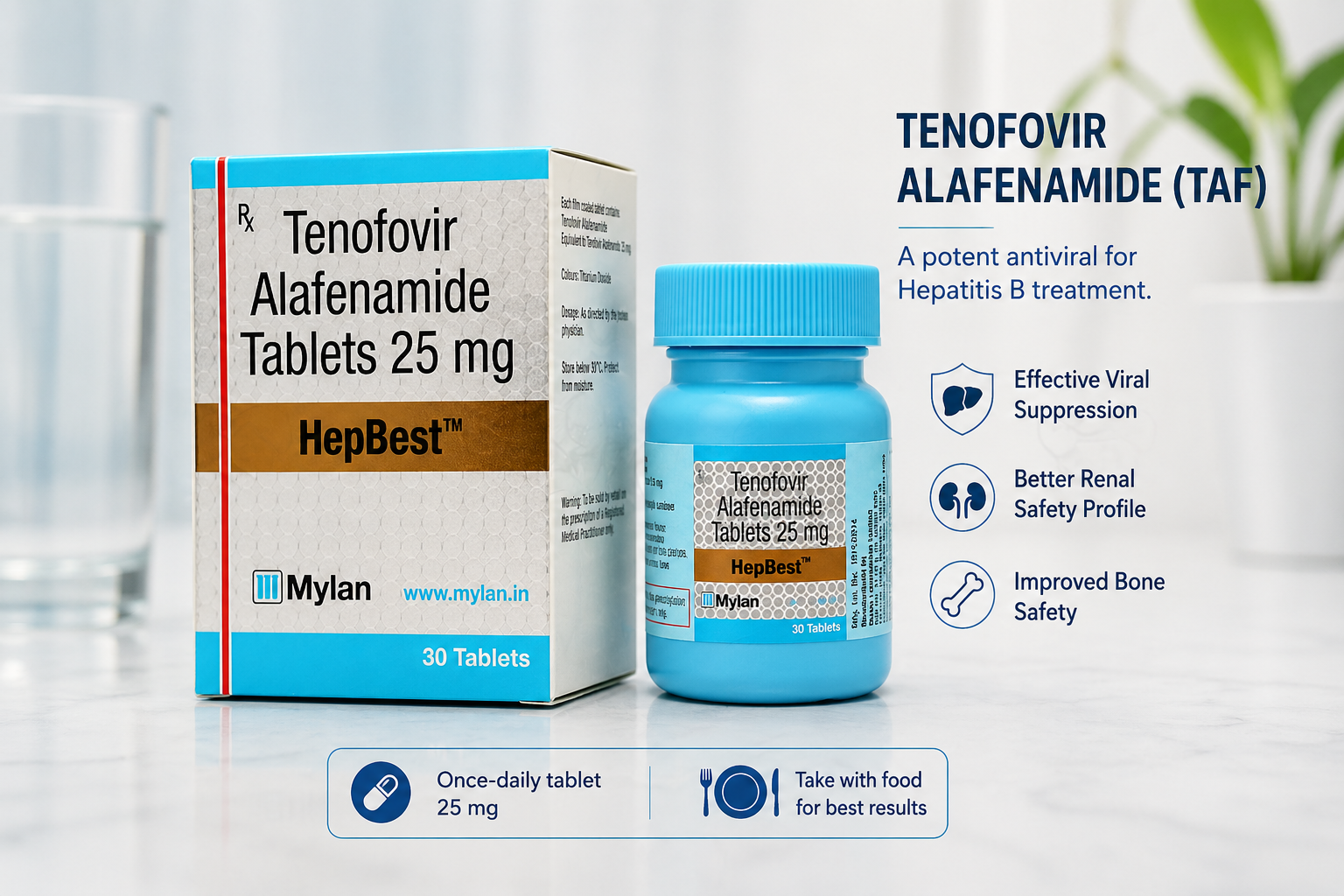
Tenofovir Alafenamide is an oral antiviral medication approved for the treatment of chronic hepatitis B infection in adults and certain pediatric patients with compensated liver disease.
TAF is a prodrug of tenofovir that delivers the active metabolite more efficiently into hepatocytes, the liver cells where HBV replication occurs. Compared with TDF, TAF achieves higher intracellular concentrations of active tenofovir diphosphate while maintaining substantially lower plasma tenofovir levels.
This targeted intracellular delivery system improves antiviral efficiency and contributes to its favorable renal and bone safety profile.
TAF is commonly marketed under the brand name Vemlidy for hepatitis B treatment.
Mechanism of Action Against HBV
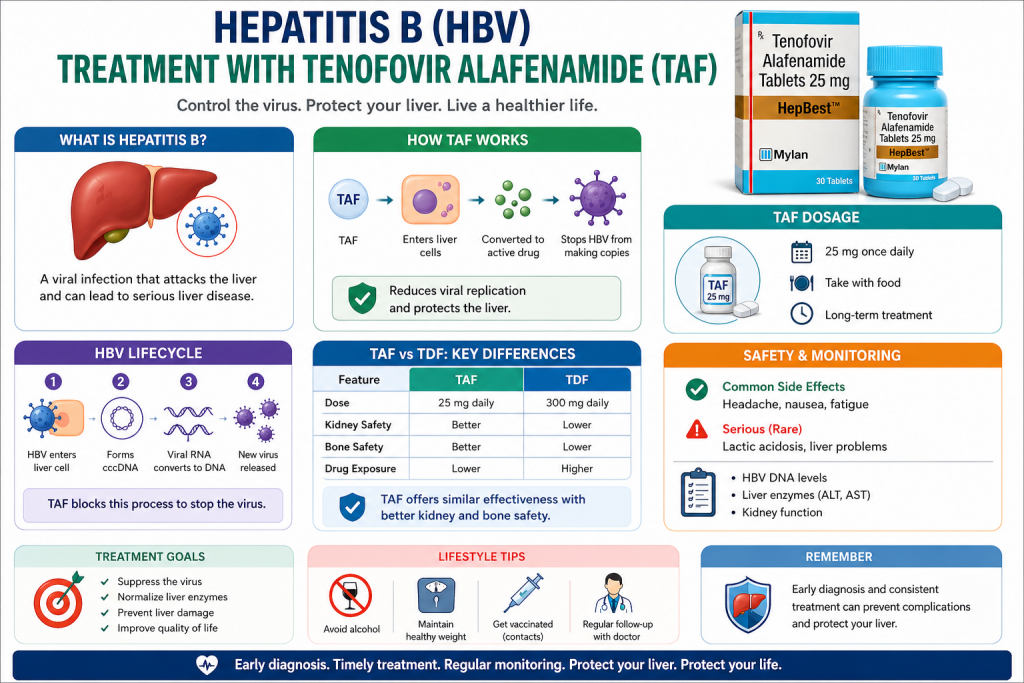
HBV replicates through reverse transcription of viral RNA into DNA. TAF inhibits hepatitis B viral replication by blocking HBV DNA polymerase activity after conversion into the active intracellular metabolite tenofovir diphosphate.
HBV DNA Replication→Inhibition by Tenofovir DiphosphateHBV\ DNA\ Replication \rightarrow Inhibition\ by\ Tenofovir\ Diphosphate
By interfering with viral DNA synthesis, TAF reduces circulating HBV DNA levels and limits ongoing viral replication within liver tissue.
Although antiviral therapy can achieve profound viral suppression, current treatments generally do not completely eradicate covalently closed circular DNA (cccDNA), meaning hepatitis B often requires long-term disease management rather than definitive cure.
Pharmacokinetics of TAF
The pharmacokinetic profile of TAF represents one of its most important therapeutic advantages.
After oral administration:
- TAF is absorbed in the gastrointestinal tract
- It enters hepatocytes efficiently
- Intracellular enzymes convert TAF into active tenofovir diphosphate
- Lower circulating plasma tenofovir concentrations reduce systemic exposure
Compared with TDF, TAF may reduce:
- renal tubular toxicity
- decline in estimated glomerular filtration rate (eGFR)
- bone mineral density reduction
These properties make TAF especially valuable for patients requiring prolonged antiviral treatment.
Indications for TAF Therapy
TAF may be prescribed for:
Chronic hepatitis B infection
compensated liver disease
Patients requiring long-term HBV suppression
Individuals at increased renal or bone safety risk
Before initiating therapy, clinicians commonly evaluate:
HBV DNA viral load
ALT and AST levels
Liver fibrosis stage
Renal function
Hepatitis B e-antigen (HBeAg) status
HIV coinfection status
HIV testing before treatment initiation is important because incomplete HIV antiviral suppression may contribute to antiviral resistance development.
Recommended Dosage and Administration
The standard adult dosage for chronic hepatitis B treatment is:
- TAF 25 mg orally once daily with food
Patients should:
- take medication consistently
- avoid missed doses
- follow physician monitoring schedules
- avoid stopping therapy abruptly without medical supervision
Sudden discontinuation may trigger severe hepatitis B exacerbations and hepatic flare reactions.
Monitoring During Treatment
Long-term monitoring is essential during antiviral therapy.
Liver Function Monitoring
Routine laboratory testing may include:
- ALT
- AST
- bilirubin
- albumin
- INR
Virologic Monitoring
Clinicians may regularly assess:
- HBV DNA viral load
- HBeAg status
- treatment response
Renal Monitoring
Although TAF demonstrates improved renal safety, monitoring remains important.
Assessment may include:
- serum creatinine
- eGFR
- urine glucose
- urine protein
Liver Cancer Surveillance
Patients with cirrhosis or elevated hepatocellular carcinoma risk often require:
- liver ultrasound
- alpha-fetoprotein testing
every six months.
Why More Doctors and Patients Choose TAF
- Gentle on Your Body: Lower risk of kidney and bone side effects compared to older tenofovir formulations.
- Strong, long-term virus control : TAF effectively keeps the virus under control, protecting your liver over the long term.
- Simple daily routine: Just one small pill a day is all you need, helping you stay consistent with your treatment.
- Fewer Side Effects: Many patients report feeling better overall, with fewer side effects and increased energy levels.
Living a Full Life with Hepatitis B
Taking TAF is not just about controlling the virus — it’s about reclaiming your health and future. When the virus is kept under control, the risk of serious liver damage drops dramatically, allowing you to focus on what matters most: family, career, and enjoying life.
To get the best results, combine TAF with healthy habits:
- Avoid alcohol
- Eat a balanced and nutritious diet
- Stay physically active
- Attend regular check-ups with your doctor
Special Populations and Clinical Considerations
Pregnancy
Pregnant patients with HBV require individualized medical assessment. Antiviral therapy decisions should involve specialists experienced in maternal-fetal medicine and liver disease management.
HIV Coinfection
Patients with HIV/HBV coinfection require carefully coordinated antiviral therapy to avoid incomplete HIV treatment and potential resistance development.
Renal Impairment
Although TAF demonstrates improved renal safety compared with TDF, patients with significant renal impairment may require individualized treatment planning and close monitoring.
Frequently Asked Questions (FAQ)
Is Hepatitis B curable?
Not completely, but it is highly manageable with antiviral therapy.
Is TAF better than TDF?
Yes, especially for patients with kidney or bone concerns.
Can treatment be stopped?
Only under medical supervision due to risk of viral rebound.
You Are Not Alone
If you or someone you love has been diagnosed with Hepatitis B, know that effective treatment is available. With medications like TAF and proper medical care, many people live long, healthy, and active lives.
Ready to take control of your Hepatitis B?
Talk to your doctor today about whether Tenofovir Alafenamide (TAF) is the right option for you.